Three Colour News
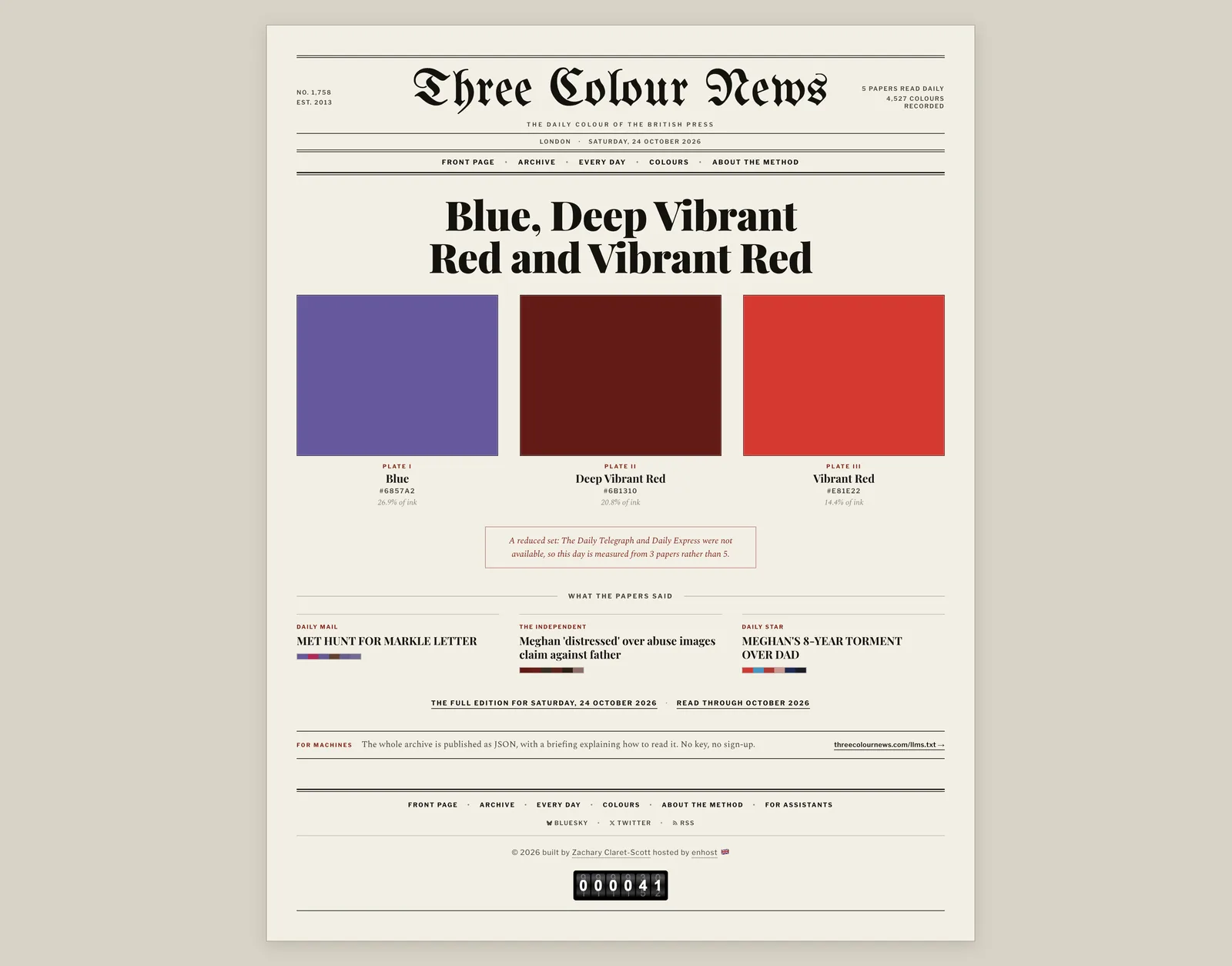
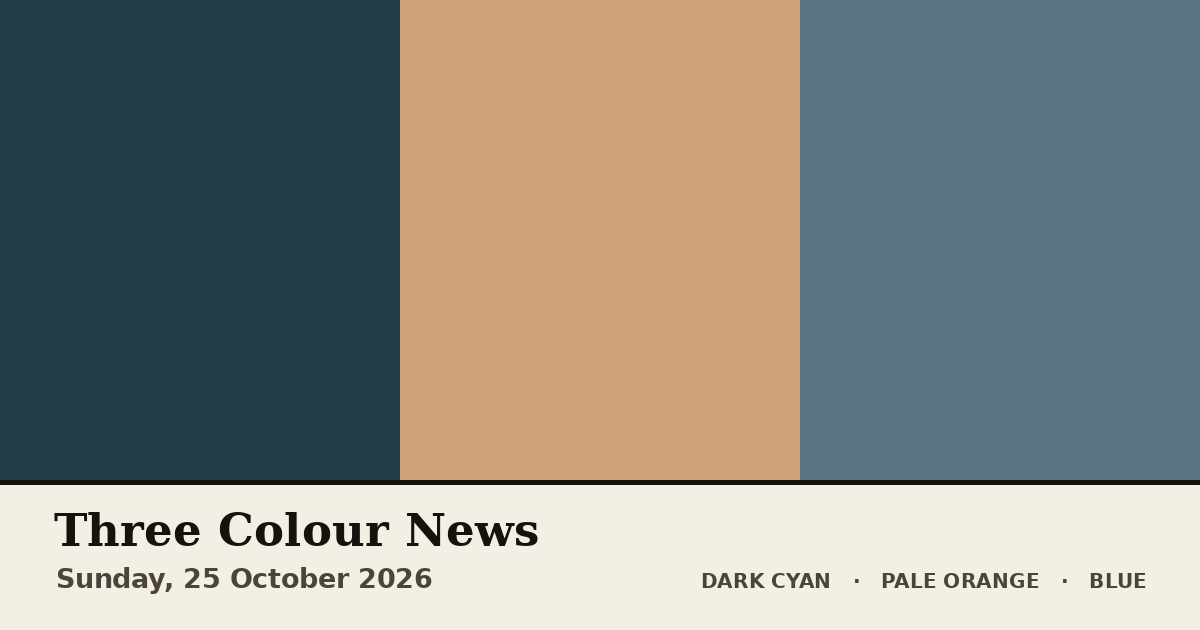
A daily paper that reduces the front pages of five British national newspapers to the three colours that covered most of them, with each day's splash headline read off the same scans.
How a day gets its colours
Each morning the front pages of five British nationals are collected as images. The top eighth of every page is cut away first, because a masthead is a fact about the paper rather than about the day — leave it in and every Tuesday looks like every other Tuesday.
What remains is reduced and read pixel by pixel. Anything that is not really a colour is discarded: the newsprint, the black of the text, the white of the margins. The survivors are clustered with k-means, the six largest become that paper's colours weighted by how much of the page they covered, and the five papers' sets are then pooled and compared in LAB space, which measures difference as the eye perceives it rather than as the arithmetic suggests.
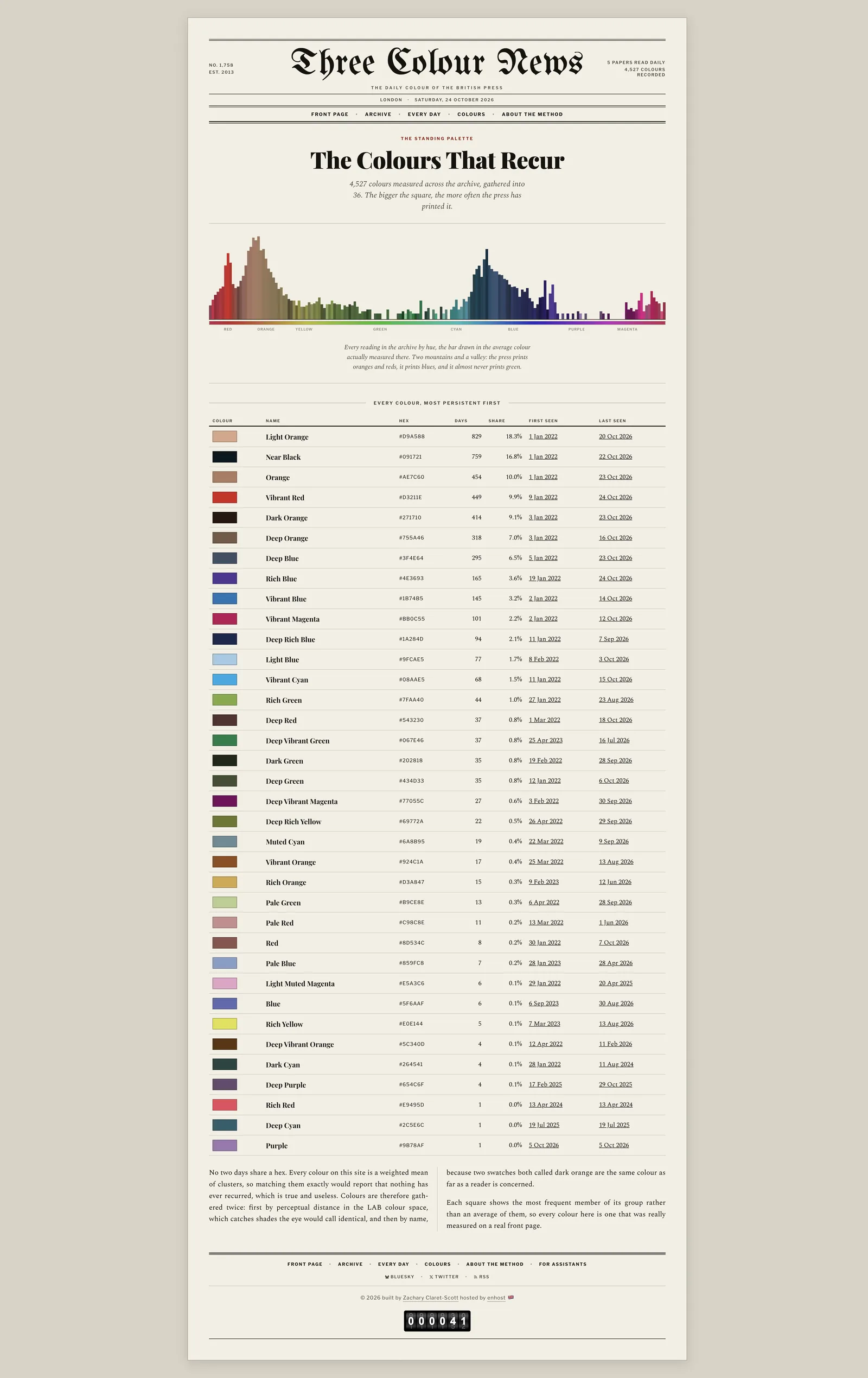
Merged groups are represented by their heaviest member, never by an average. That distinction carried the whole project: averaging unlike colours reliably produces brown, and the first version spent its life reporting mud for exactly that reason. A colour printed here is a colour that was actually on a page.
Finding the headline
The splash is found by geometry, not by meaning. OCR runs locally rather than through any outside service, every line of recognised text is kept with its position and size, lines of similar size sitting together are grouped into blocks, and the block carrying the most ink wins. Nothing is read for sense — the machine only knows that these words are set six times larger than those.
Mastheads resist in three separate ways: they sit at the top of the page, they often match the paper's own name, and The Independent sets its nameplate sideways down the left edge, which to a recogniser looks like one line of type as tall as the page. All three are tested for.
Two runs, thirteen years apart
It began in September 2013 as a Twitter bot that did one thing: read the front pages, reduce them to three colours, post them. It stopped in 2015 and stayed quiet for a decade.
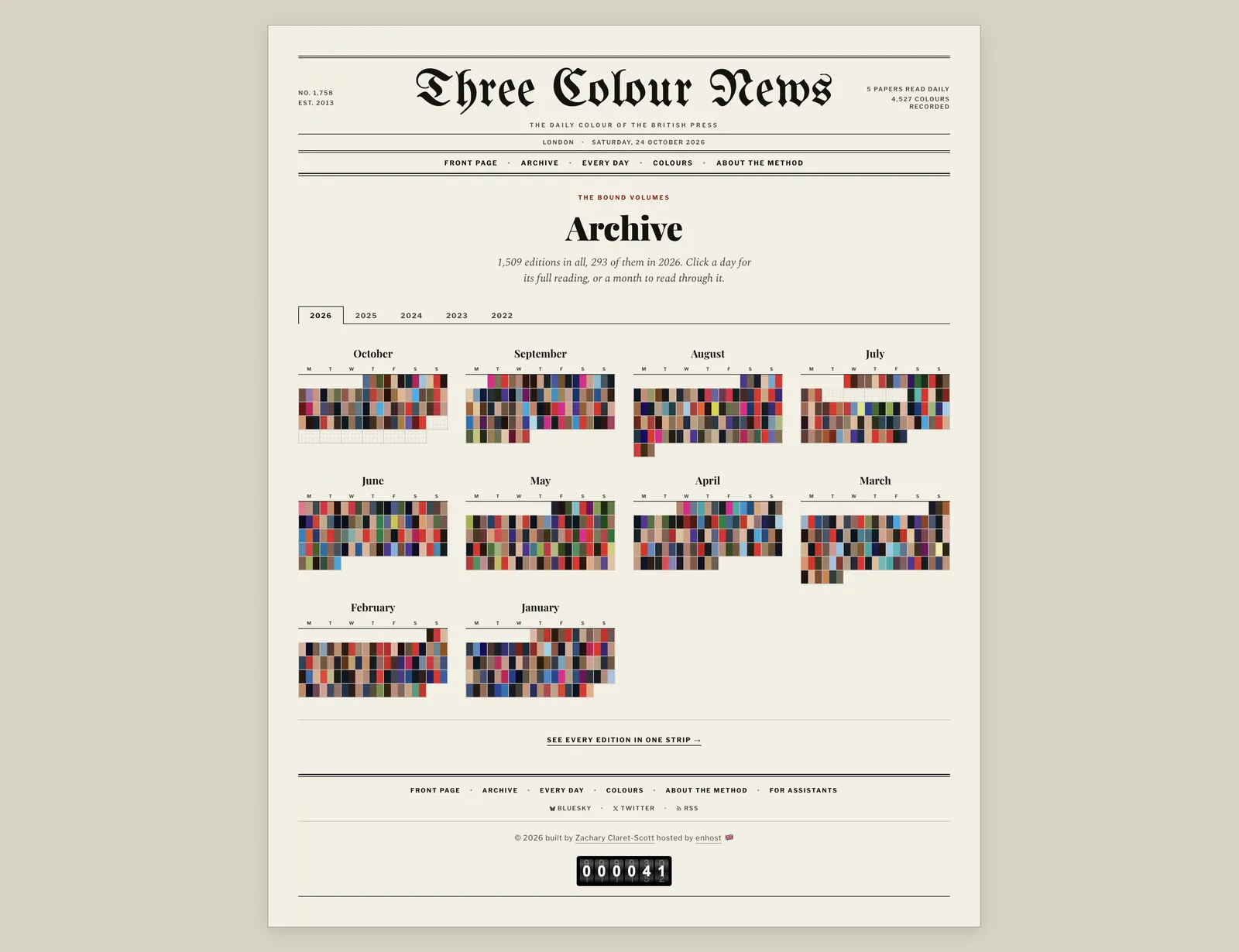
This is the revival, rebuilt from nothing in 2026 as a newspaper rather than a feed. The idea is recognisably the same and almost all of the machinery is different. The original run kept no archive, so the record here starts on 1 January 2026 and the editions are numbered as a new series.
The scans themselves are read, measured and discarded — the site never republishes a front page.